What are AI Agents
Intro to agents
Go agents
Introduction to AI Agents: How They Work and Why They Matter
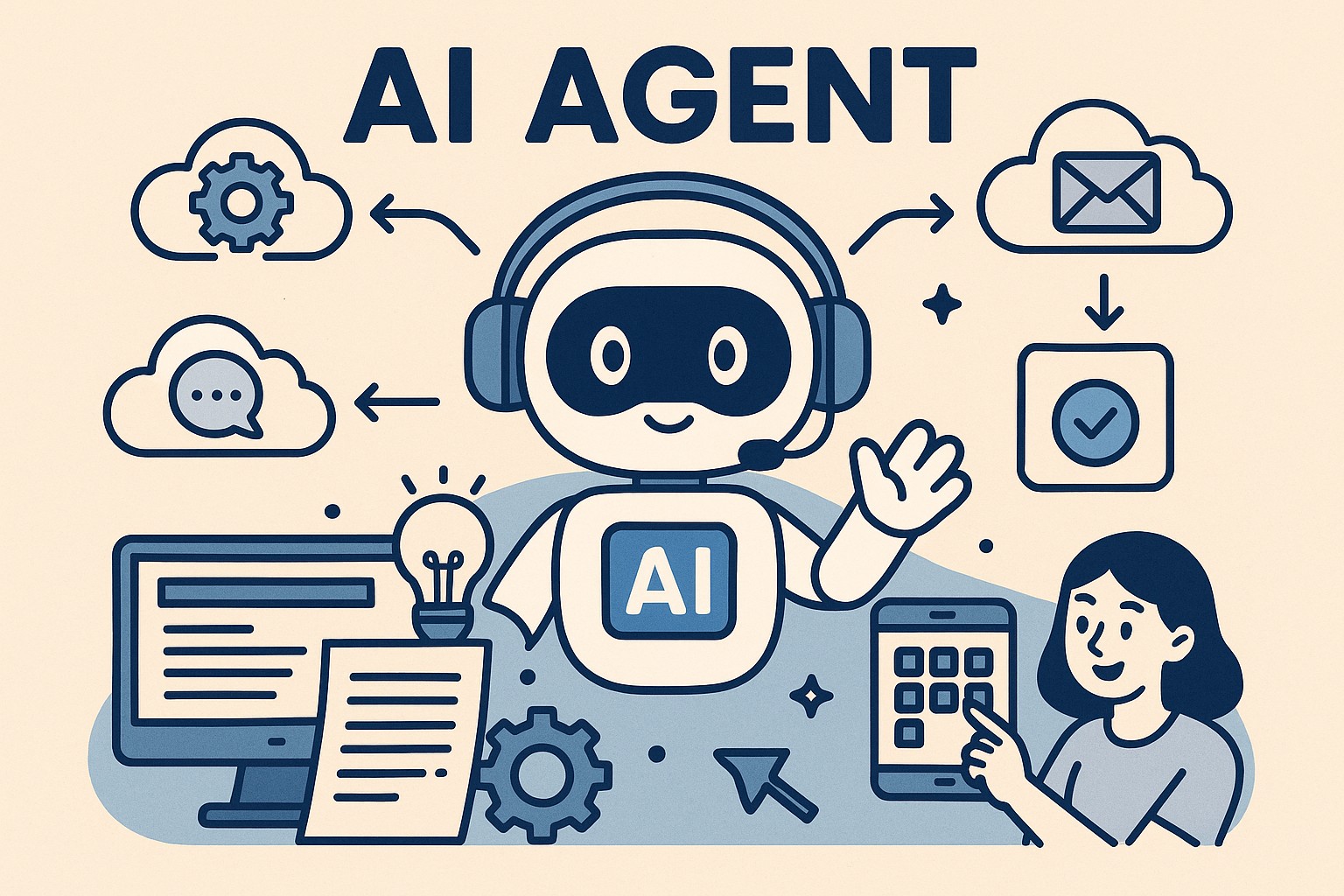
AI agents are emerging as the next evolution of large language model (LLM) systems. While traditional LLMs generate responses based solely on a single prompt, AI agents are designed to act, reason, plan, and interact with tools or environments. They transform LLMs from passive text generators into active problem solvers.
This shift unlocks new possibilities across automation, research, enterprise systems, and real-world applications.
What Is an AI Agent?
An AI agent is a system that uses an LLM or ML model to:
- Understand a goal or task.
- Break the goal into steps.
- Use tools, APIs, or external systems.
- Observe the result.
- Adjust and continue until the task is finished.
In simple terms, an AI agent is an LLM with the ability to take actions.
Why AI Agents Matter
Traditional LLMs work on "single-turn" inputs. They answer but do not think ahead, revise, or perform multi-step work. AI agents solve this by:
- Planning multiple steps to reach a goal
- Using tools such as search, code execution, retrieval, or external APIs
- Interacting with data or software systems
- Iterating based on feedback from the environment
- Executing workflows automatically rather than relying on the user
This makes agents far more capable and reliable for complex tasks.
Core Components of an AI Agent
Although implementations vary, most AI agents contain the following building blocks:
1. Policy or Reasoning Engine
The LLM that decides what the agent should do next. Examples: GPT-4/5, Claude, Llama, Gemini.
2. Memory
Stores relevant information across steps, such as:
- Short-term working memory
- Long-term storage
- Vector databases for retrie
...
Sign in to explore stories
Join Mindloop to read unlimited stories, write your own, and connect with writers.